
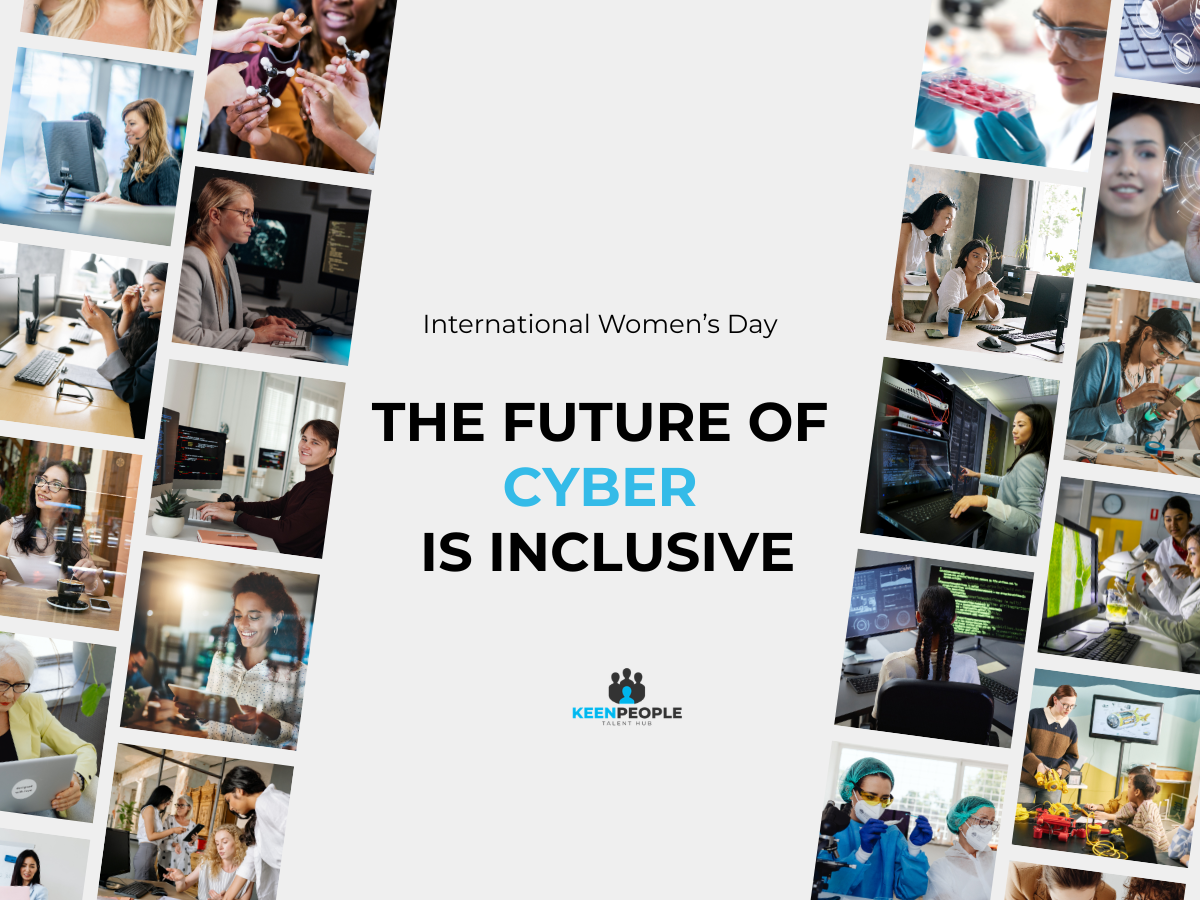
Every year, we see the same statistics shared about women’s representation in tech and cybersecurity.
Panels are hosted.
Statements are published.
Commitments are made.
And yet, in many specialist tech and cybersecurity hiring processes, the shortlist still looks very similar and rarely reflects the diversity of women already working, learning, or trying to break into these fields.
So what is really changing?
In cyber and engineering markets across the UK, the challenge is rarely a lack of ambition. It is structural friction.
Role briefs written around legacy career paths.
Non-negotiables that quietly narrow the talent pool.
Hiring processes that favour confidence over capability.
Short notice periods that exclude professionals balancing caring responsibilities.
None of this is intentional. But impact matters more than intent.
When organisations genuinely improve representation in technical teams, it usually happens because something practical changed. A job specification was refined. A rigid requirement was challenged. Interview panels became more structured. Leadership made it clear that diverse thinking was commercially valuable, not just socially desirable.
In cybersecurity especially, diversity is not simply a fairness issue. It is a resilience issue. Homogenous teams approach risk in similar ways. Diverse teams challenge assumptions, question blind spots and strengthen decision-making.
We are seeing progress. More women entering cloud security, GRC and DevSecOps pathways. More visibility of female security leaders. Stronger early-career pipelines.
But progress is uneven, and it requires deliberate hiring design.
International Women’s Day should not just be about recognition. It should prompt one practical question:
What, specifically, are we doing differently in our hiring strategy this year?
Because representation does not shift through intention alone.
It shifts through structure.