
Many organisations assume that if they find the right candidate, the offer will naturally be accepted.
But in cybersecurity hiring, that is not always the case.
Strong candidates are often considering multiple opportunities at the same time, and small details can make a big difference when they decide where to go.
Over time, we have seen a few common reasons why candidates decide not to move forward.
Understanding these factors can help organisations secure the talent they really want.
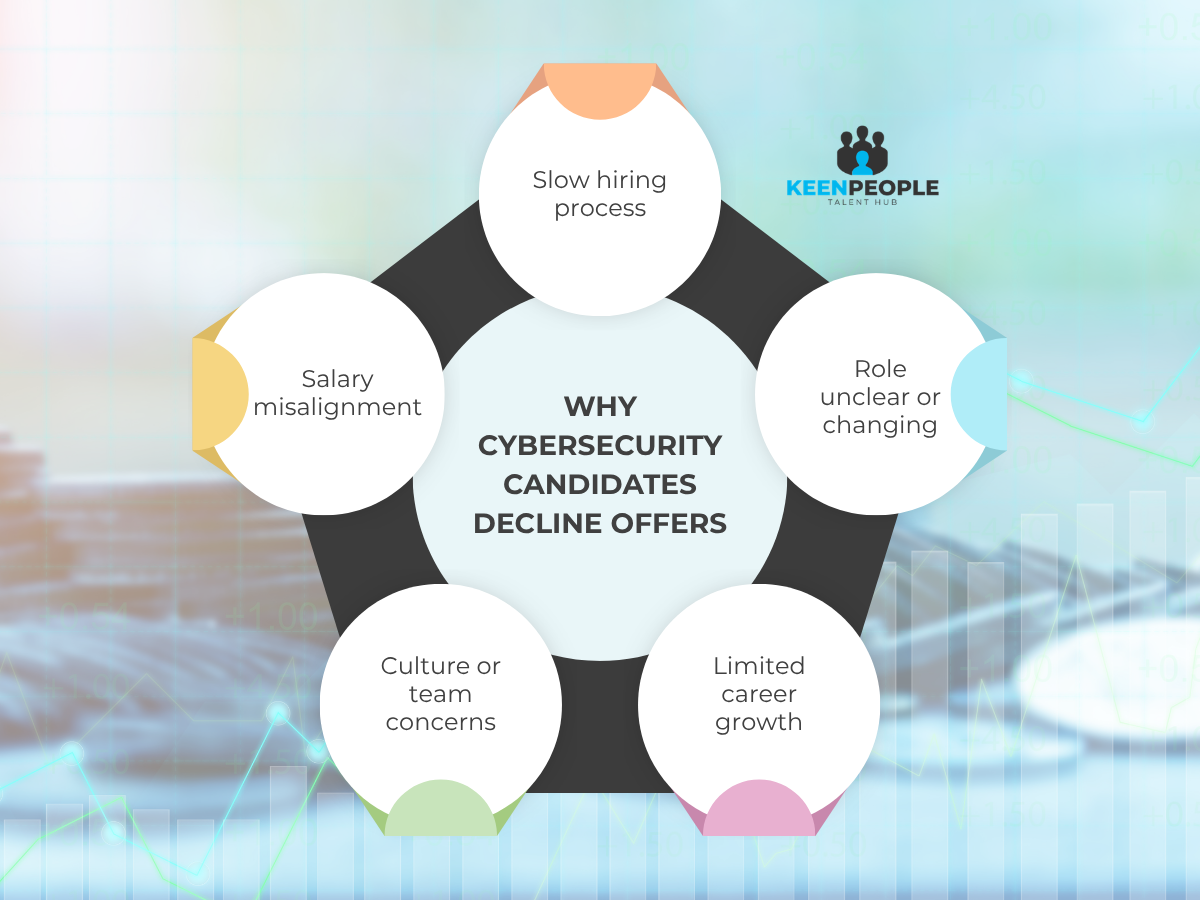
• The Hiring Process Takes Too Long
Cybersecurity professionals are in high demand.
If the hiring process stretches across too many interviews or long decision cycles, candidates may accept another offer before the process is finished.
A clear and efficient process often makes a significant difference.
• The Role Feels Different From the Job Description
Sometimes candidates discover during interviews that the role is not quite what they expected.
This can happen when responsibilities are unclear or when the role has evolved over time.
Clear communication early in the process helps avoid this situation.
• Limited Growth Opportunities
Many cybersecurity professionals are motivated by learning and progression.
If candidates feel the role may limit their development or exposure to new technologies, they may look elsewhere.
• Lack of Team or Culture Fit
Technical professionals also care about the people they will work with.
Conversations with the team, leadership style, and company culture all influence their decision.
• Compensation Misalignment
Salary is not always the only factor, but it does need to reflect the market and the expectations of the role.
Transparency early in the process helps avoid surprises at the final stage.
The Takeaway
Hiring cybersecurity talent is not only about finding the right candidate.
It is also about creating a hiring experience that reflects the organisation’s clarity, culture, and long-term vision.
When the process is transparent, efficient, and aligned with candidate expectations, the chances of securing top talent increase significantly.