As a team, we regularly share insights and discuss the latest research in tech and recruitment. Recently, one of our team members brought an episode of Oxford Tea Talks to our attention, where Professors Kejia Hu and M. Eric Johnson explored how Artificial Intelligence is fundamentally reshaping work, learning, and value creation.
Their framework on the four levels of AI transformation resonated strongly with our observations in the recruitment market. We fully agree with their insights and wanted to share our perspective on what these levels mean for the future of hiring and how organisations can leverage them to secure a competitive advantage.
1. Automation: Efficiency Meets Empathy
Automation is where machines take over repetitive tasks. In recruitment, this typically involves screening initial CVs, scheduling complex interview panels, and managing high-volume application flows.
From our viewpoint, automation is not a replacement for the human element. By removing administrative heavy lifting, recruiters are freed to focus on high-value activities, such as building genuine relationships, understanding client culture, and providing strategic advice.
For candidates, this results in a smoother, faster process with significantly reduced risk of human error or delays.
2. Personalisation: Tailoring the Candidate Journey
AI enables personalisation at scale. This goes beyond inserting a name into an email. It involves recommending highly relevant job opportunities based on skills analysis and providing customised onboarding experiences.
We have observed that top-tier candidates now expect recruitment processes that feel human even when supported by technology. Personalisation increases engagement, reduces drop-off rates, and ensures the right talent finds the right role faster.
3. Operational Innovation: Rethinking Workflows
Operational innovation moves beyond simple efficiency. AI can analyse hiring patterns, predict candidate success, and optimise team structures.
In practice, organisations using AI to identify skills gaps, suggest training pathways, or highlight strategic hiring priorities can transform recruitment from a reactive, transactional task into a proactive strategic function. It allows leaders to hire for the future, not just for immediate vacancies.
4. Business Innovation: The Rise of New Roles
Finally, AI is driving business innovation by creating entirely new roles and industries. Positions such as AI Trainers, Prompt Engineers, and AI Ethics Officers are emerging.
From our perspective, understanding these roles early is critical for both clients and candidates. Organisations that plan for these emerging opportunities now can secure highly sought-after talent before competitors even realise the need exists.
Why This Matters for 2026
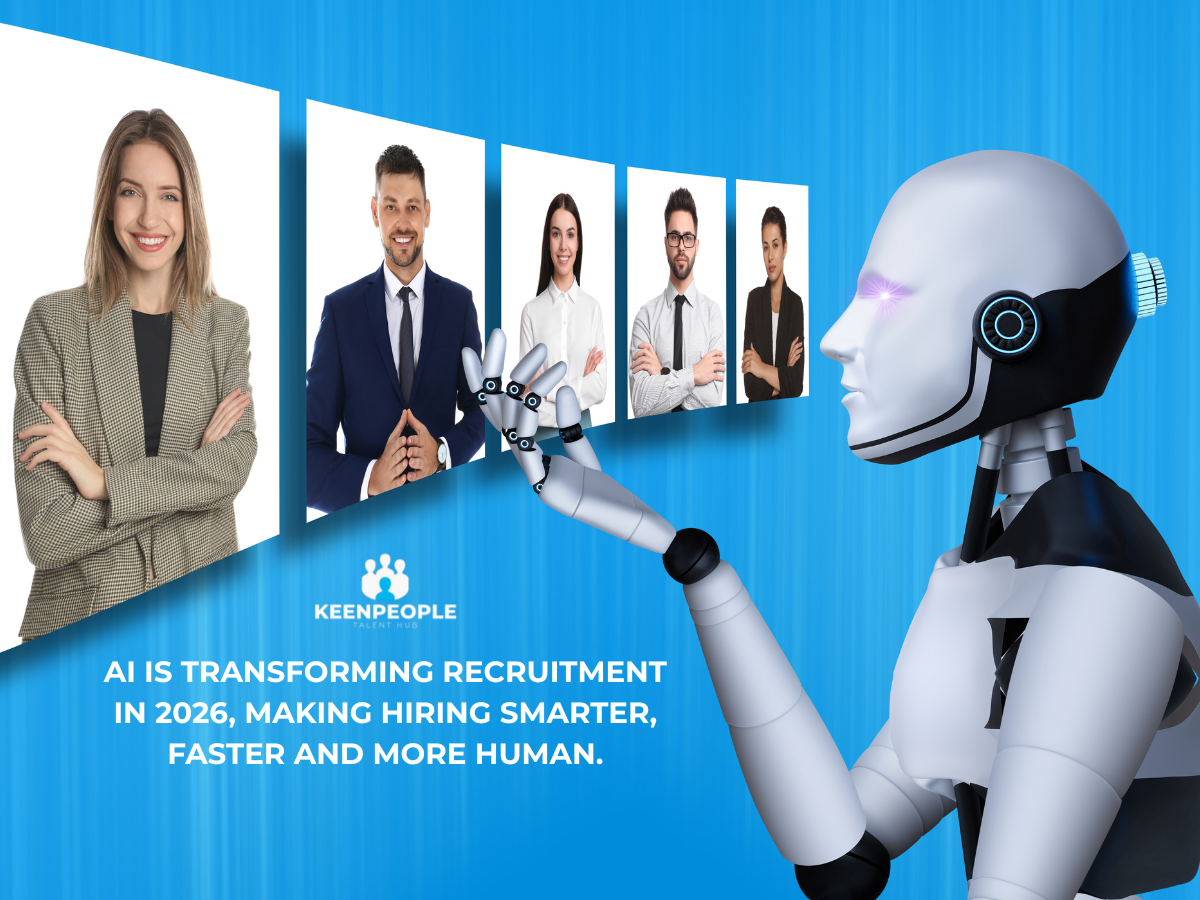
AI is not a replacement for recruiters. It is a powerful enabler. The agencies and hiring teams that will lead the market in 2026 are those that successfully combine human insight with AI capabilities.
Candidates experience faster, more personalised journeys. Clients gain better strategic insight and higher-quality hires. Recruitment becomes future-focused, efficient, and innovative.
Even as technology advances, human expertise remains irreplaceable. Combining AI with experience and insight ensures recruitment is proactive, strategic, and aligned with the complex needs of modern business.
Looking Ahead
As 2026 approaches, AI integration in recruitment will continue to accelerate. Focusing on automation, personalisation, operational innovation, and business innovation is essential to staying ahead.
Recruitment is no longer just about filling roles. It is about anticipating skills trends, shaping candidate experiences, and advising organisations strategically. AI makes this possible, but success still depends on thoughtful human guidance.
For organisations and candidates alike, understanding these trends today is what will ensure successful hiring, retention, and career growth tomorrow. Observing these trends and translating them into practical recruitment strategies is what separates reactive hiring from proactive talent leadership. Agencies and teams that integrate AI insight with human expertise will be the ones shaping the workforce of 2026.
Bringing this discussion to the team reinforced what we see every day. AI is transforming recruitment. The teams that combine technology with human insight are the ones helping clients and candidates navigate the future successfully. Staying ahead of trends, understanding emerging roles, and applying strategic insight is what makes a recruitment partner truly effective.