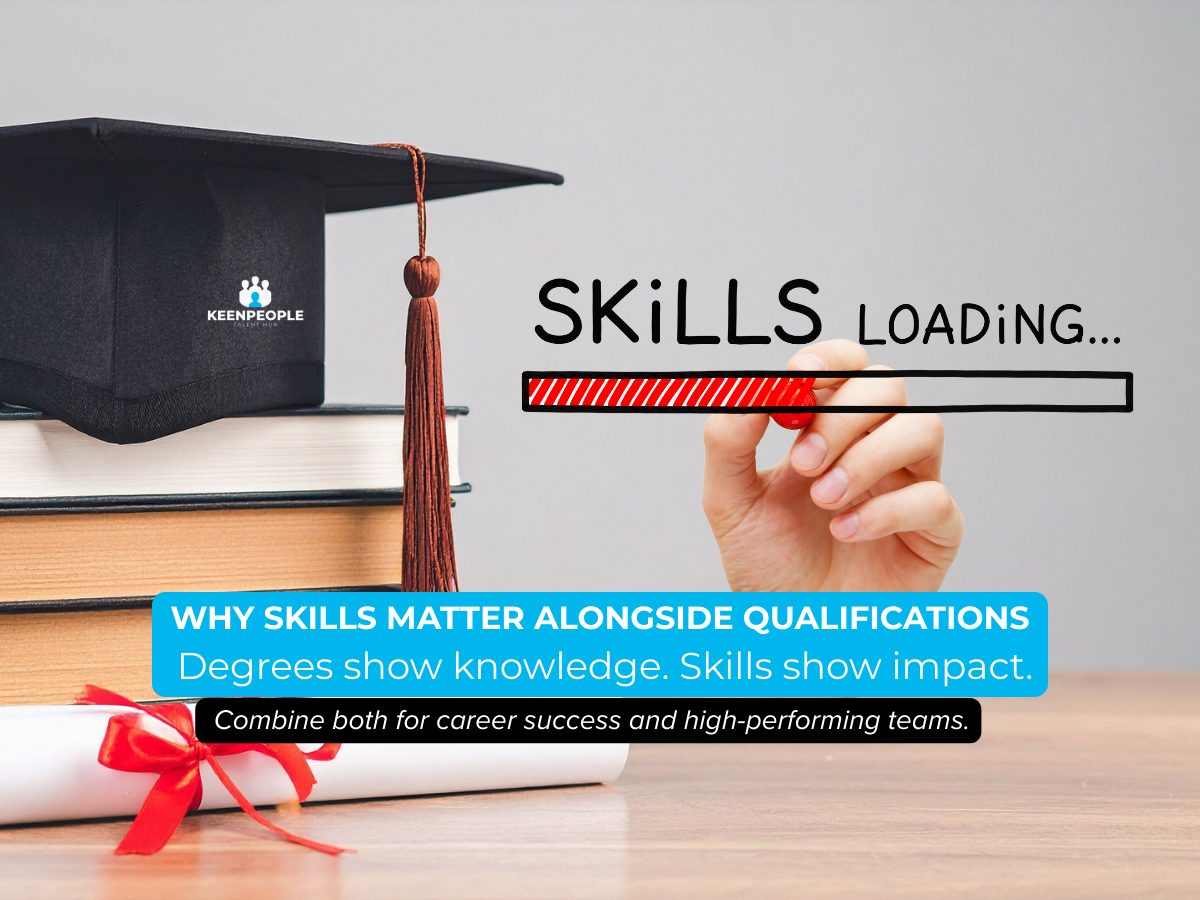
Education and formal qualifications have always been important markers of knowledge, commitment, and expertise. Degrees and masters demonstrate dedication and mastery of a field, and they remain highly valuable. Yet, in this swift-moving professional sphere, organisations are looking beyond titles and years of experience to see what candidates can actually do. Job requirements are changing rapidly, and the ability to adapt, learn, and apply knowledge effectively is often what separates a strong candidate from a truly outstanding employee.
Skills-based hiring recognises that real-world ability is often the difference between potential and performance. It opens doors to talented individuals from non-traditional backgrounds, such as career switchers, self-taught professionals, or those with specialised certifications, without diminishing the value of formal education. Today, employers increasingly seek a mix of technical skills, such as coding, data analysis, or cybersecurity expertise, and interpersonal skills, including communication, problem-solving, and collaboration. Candidates who can demonstrate these abilities are more likely to thrive in dynamic work environments.
Alongside hiring, skills-based compensation is gaining traction. Pay is increasingly linked to actual ability and measurable impact rather than tenure or job titles alone. Employees with rare or in-demand skills receive fair recognition, while organisations benefit from motivated teams who can deliver results from day one. This approach also encourages continuous learning, as employees see a clear connection between developing new skills and career growth.
For recruitment agencies, this shift aligns perfectly with our philosophy. We match candidates to roles based on tangible strengths, not just what appears on a CV. We help employers recognise the real value each individual brings, combining formal qualifications with practical, demonstrable skills.
The benefits are clear. Organisations gain agility, inclusivity, and high-performing teams. Candidates experience fairness, recognition, and opportunities to shine.
In a world where technology and business needs change constantly, skills are the currency that drives success alongside education.